


Hardness Test – Evaluate Material Strength and Durability
Professional Inspection Services Ensuring Safety, Quality & Compliance
- Home
- Hardness Test
At Arab Wondars, we offer precise and reliable hardness testing services to support quality assurance, welding inspections, and post-treatment evaluations. Our testing methods help determine the strength, durability, and performance characteristics of metal components.
What is a Hardness Test?
Purpose and Importance in Quality Control
At Arab Wondars, hardness testing plays a vital role in quality control by measuring a material’s resistance to deformation. This testing ensures that metals and alloys meet the required mechanical properties for applications such as welding, fabrication, and structural use.
Hardness testing is also essential for evaluating the effects of heat treatment, material processing, and wear, helping to confirm that components perform reliably under operational conditions.
Accurate Hardness Testing Methods
Understanding how to accurately test metal hardness is key to assessing strength, durability, and resistance to stress. At Arab Wondars, our NDT specialists carefully select the most appropriate testing method based on the material type, application requirements, and sample characteristics.
All hardness testing procedures are carried out in accordance with recognized international standards such as ISO and ASTM, ensuring precise results, compliance, and reliable evaluation of material performance.
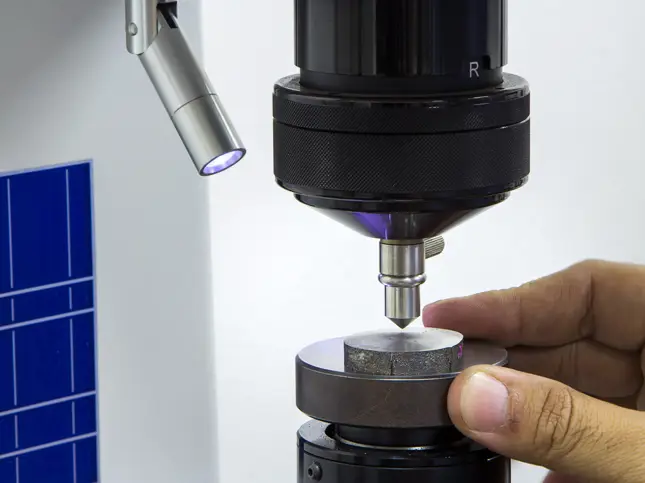
Our Hardness Testing Methods
Brinell Hardness Test (BHN)
The Brinell Hardness Test is used to assess material hardness in castings and coarse-grained metals using a steel or tungsten carbide ball.
The BHN method leaves a large indentation and is suitable for identifying surface integrity over broader areas.
Rockwell Hardness Test (HR)
The Rockwell Hardness Test is frequently used in labs and production facilities due to its speed and simplicity in providing results.
The test offers a direct-read measurement using various scales depending on the material and depth of penetration. This hardness test is ideal for alloys and processed materials.
Vickers Hardness Test (VHN)
The Vickers Hardness Test provides precise microhardness readings using a diamond-shaped indenter.
This test is the preferred method for evaluating thin sections, coatings, or other small components where high accuracy is crucial.
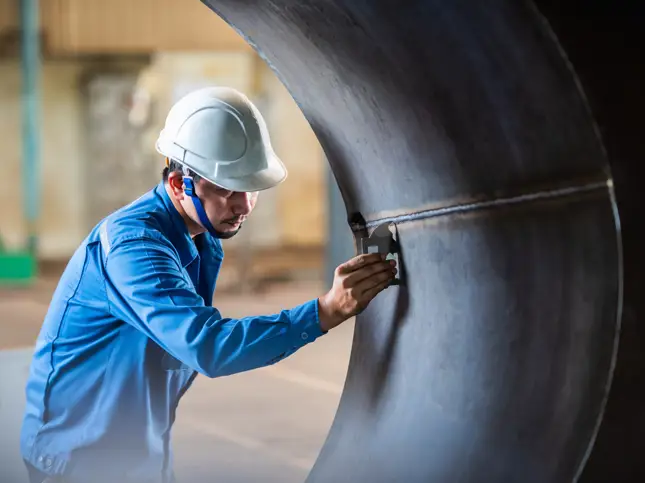
Supporting Services for Material Integrity
Pre-Heating Support Before Hardness Testing
At Arab Wondars, we provide pre-heating support services to help stabilize material structure and relieve internal stresses prior to hardness testing. This process is particularly important after welding or heat treatment, where residual stresses may affect test accuracy.
Our experienced team evaluates each application and advises when pre-heating is required, ensuring more reliable and consistent hardness test results.
Surface Roughness Testing for Quality Evaluation
Surface roughness testing is used to assess the finish and texture of metal components, which can directly influence both hardness test readings and overall performance.
At Arab Wondars, this service is often combined with hardness testing to deliver a more comprehensive evaluation of component integrity. By analyzing both material strength and surface condition, we help clients ensure quality, performance, and compliance with required standards.
Applications of Hardness Testing
Welding and Fabrication Inspection
At Arab Wondars, hardness testing is widely used to evaluate weld quality and the properties of the surrounding heat-affected zone (HAZ). This process helps verify that welding procedures have been correctly applied and that materials comply with approved standards and specifications.
Accurate hardness measurements are essential for confirming the structural integrity, strength, and long-term performance of welded components across various industrial applications.
Heat Treatment Verification
Our hardness testing services are also applied after heat treatment processes such as quenching, tempering, and annealing to confirm that the desired material properties have been achieved.
By assessing hardness levels, Arab Wondars ensures that materials meet required mechanical strength criteria, comply with project specifications, and support comprehensive quality control documentation for reliable and safe operation.
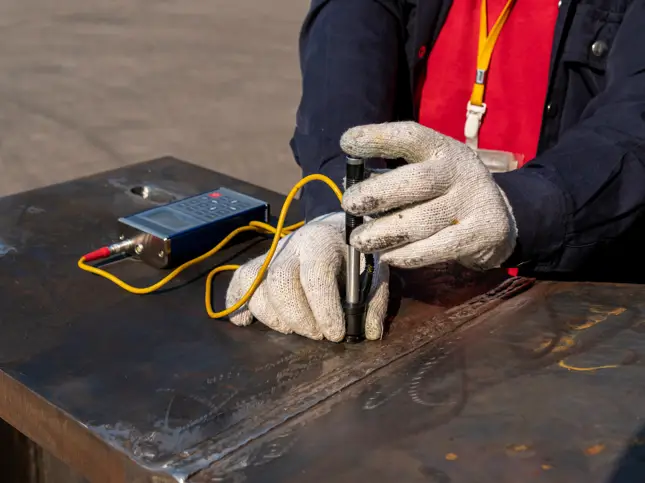
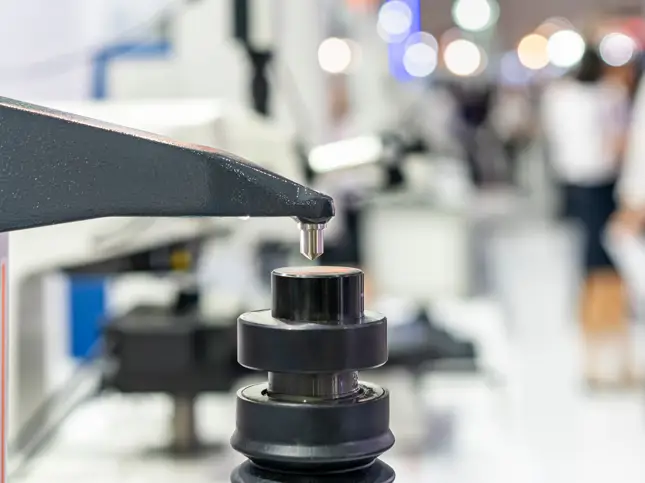
Pipeline, Pressure Vessel, and Structural Steel Assessment
Hardness measurements are used to detect potential issues from stress, fatigue, or inconsistent material sourcing for pipework, pressure vessels and structural steel.
We perform both shop and field testing using portable tools for reliable onsite results.
Why Choose Arabwondars for Hardness Testing?
Mobile and On-Site Hardness Testing Capabilities
At Arab Wondars, we provide flexible mobile and on-site hardness testing services, allowing inspections to be carried out directly at project locations. This approach helps reduce turnaround time, minimize operational disruption, and support efficient project execution.
Skilled Technicians with Standards Compliance
Our experienced NDT professionals perform all hardness testing in accordance with internationally recognized standards such as ISO, ASTM, and ASME. This ensures accurate, consistent, and reliable results across a wide range of materials and industrial applications.
Multiple Hardness Testing Methods Available
Arab Wondars offers a complete range of hardness testing methods, including the Brinell, Rockwell, and Vickers hardness tests, providing flexibility to meet different material types, project requirements, and testing conditions.
Hardness Test FAQs
A hardness test measures how resistant a material is to indentation or deformation. It’s an essential step in quality control to evaluate strength and wear resistance. We use this test to assess metals and alloys across welding, fabrication, and structural applications to ensure they meet required standards.
No. A hardness test is classified as an NDT (Non-destructive testing) method. It leaves a small indentation but does not compromise the overall integrity of the tested component.
We carry out hardness testing to verify that materials meet strict strength, safety and specification requirements. The test is often used after pre heating, welding or heat treatment processes to confirm that the mechanical properties required have been achieved and that the material is fit for purpose.